




Why Cotton and Linen Are the Foundation of a Sustainable Table
Every product we make starts with one of two natural fibers: cotton or linen. Both are renewable, biodegradable, and have been used in households for thousands of years long before synthetic, disposable alternatives existed.
Cotton
Soft, breathable, and highly absorbent, cotton is the most widely used natural fiber in home textiles. It is durable through repeated washing, gentle on skin, and when GOTS certified grown without synthetic pesticides or fertilizers. Our cotton napkins, tablecloths, placemats and kitchen towels are designed for daily use and frequent washing without losing softness or shape.
Linen
Made from the flax plant, linen is naturally antibacterial, highly absorbent, and becomes softer and more beautiful with every wash. It requires less water to grow than many other fibers and is fully biodegradable at end of life. Linen kitchen towels and napkins are especially prized for their quick-drying properties ideal for the heaviest daily kitchen tasks.
The Impact of One Swap: Napkins as an Example
To understand the scale of impact a reusable textile can have, look at napkins. A single set of 12 reusable cotton napkins replaces approximately 4,380 disposable paper napkins over three years based on a household using four paper napkins a day.
Napkins
A single set of 12 reusable cotton napkins replaces approximately 4,380 disposable paper napkins over three years.
Tablecloths
A reusable tablecloth replaces every disposable paper table cover used at gatherings for years to come.
Kitchen Towels
A set of reusable kitchen towels replaces the weekly paper towel roll, reducing everyday waste.
Placemats
Reusable placemats replace disposable paper placemats at every meal, for every person, indefinitely.
The Zero Waste Table & Kitchen Swap Guide
These four swaps cover almost everything disposable on your table and in your daily kitchen routine. Each is a one-time purchase that replaces an ongoing, repeated disposable cost and each is made from natural cotton or linen.
| Disposable Habit | Reusable Swap | Shop ACL |
|---|---|---|
| Disposable paper napkins | Reusable cotton & linen napkins | Napkins |
| Disposable paper tablecloths & table covers | Reusable cotton & linen tablecloths | Tablecloths |
| Paper placemats | Washable cotton & linen placemats | Placemats |
| Paper towels & rolls | Cotton & linen kitchen towels | Kitchen Towels |
Start with whichever item you replace most often for most households, that is paper napkins and paper towels. Add a tablecloth and placemats for your next gathering, and your table is set for years without another disposable purchase.
How to Make Your Reusable Napkins Last for Years
The sustainability case for reusable napkins depends on them actually lasting. Here is how to get 5 to 7 years of daily use from your All Cotton and Linen napkins:
Wash Cold or Warm (Up to 40°C)
Cold water preserves colour and extends fabric life. Hot water is safe for white napkins when sanitizing is needed.
Use a Gentle, Fragrance-Free Detergent
Especially for certified products — harsh detergents break down natural fibers faster.
Tumble Dry Low or Line Dry
Air drying is best. Low heat in the dryer prevents shrinkage and maintains the shape of hemstitched edges.
Treat Food Stains Promptly
Cold water and a small amount of dish soap will lift most food stains before they set. Avoid bleach on coloured napkins.
Iron on Medium Heat if Desired
Cotton and linen respond beautifully to a warm iron, especially when slightly damp. Not required — many customers love the natural linen look.
Note: Linen napkins will soften and improve with every wash. Some natural wrinkling is characteristic of linen fabric — it is a sign of quality, not wear.
Napkins: A Reusable Swap for Every Meal
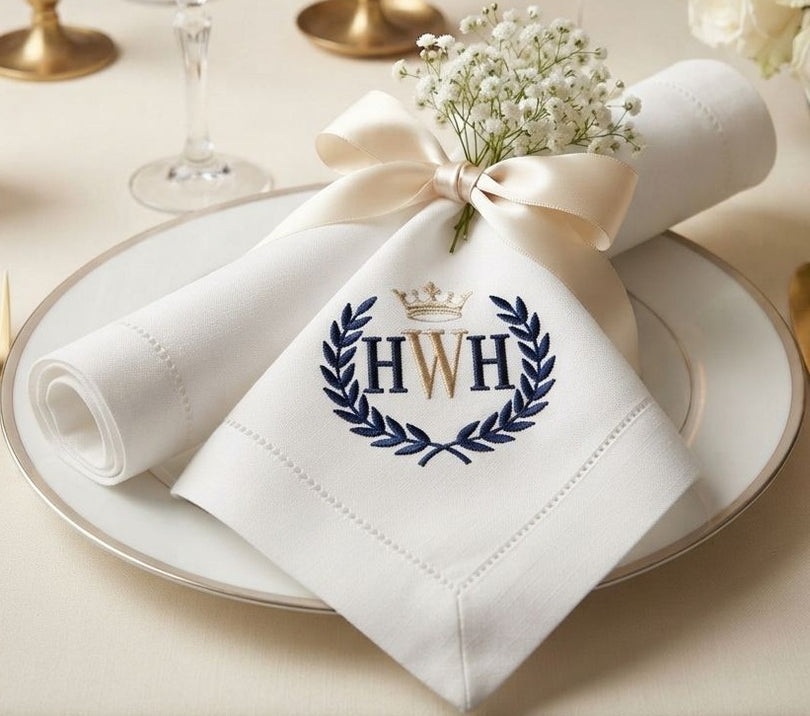
Paper napkins are used once, for minutes, and thrown away. All Cotton and Linen napkins are made from natural cotton or linen, machine washable, and designed to be used every day for years.
From plain everyday napkins to hemstitched, embroidered, and scalloped designs, our napkins bring a more considered look to the table while reducing disposable waste.
- 100% cotton, linen, and cotton-linen blend options
- Plain, striped, hemstitched, embroidered, lace and scalloped designs
- Machine washable for daily use


Tablecloths: One Purchase for Every Occasion, for Years
Paper and plastic table covers are bought for a single event and thrown away the same day. A cotton or linen tablecloth from All Cotton and Linen is bought once and used for every dinner, holiday, and gathering that follows for years.
Our tablecloths are made from natural cotton and linen and are finished to withstand repeated washing without losing shape, colour, or texture. Spills wash out. Wrinkles iron out. The tablecloth stays.
- Available in round, rectangular, oval and square shapes to fit any table
- Solid colours, stripes, checks, embroidered and printed designs
- Machine washable cotton and linen — no special care required
- One tablecloth replaces dozens of single-use table covers over its lifetime
Kitchen Towels: The Everyday Paper Towel Replacement
Paper towels are the most-replaced disposable item in most kitchens bought weekly, used in seconds, and gone. A set of cotton or linen kitchen towels from All Cotton and Linen does everything a paper towel does: dries hands, wipes counters, drains fried food, covers rising dough and then goes into the wash to be used again the next day.
Linen kitchen towels in particular are highly absorbent and dry quickly between uses, making them ideal for the heaviest daily kitchen tasks.
- Cotton and linen options, including Turkish-style towels
- Striped, plaid, plain and tasseled designs
- Highly absorbent built for daily kitchen use, not display


Placemats: Reusable at Every Seat, Every Meal
Paper placemats are designed to be used once. Cloth placemats from All Cotton and Linen are designed to be used at every meal, for every person at the table, for years simply wiped down or washed between uses.
Made from cotton and linen and finished with hemstitch, scalloped, or embroidered detailing, our placemats bring the same elevated look to a casual weeknight dinner as they do to a holiday table without a single disposable item involved.
- Round, rectangular and oval shapes available
- Hemstitched, scalloped, embroidered and jacquard finishes
- Wipeable and machine washable for daily use
- Sold in sets equip the whole table in one order
Frequently Asked Questions
Yes. Natural cotton and linen are renewable, biodegradable fibers that do not shed microplastics in the wash. A single set of 12 reusable cotton napkins replaces approximately 4,380 disposable paper napkins over three years and the same principle applies to tablecloths replacing disposable table covers, placemats replacing paper placemats, and kitchen towels replacing paper towel rolls.
Cotton is soft, breathable, and highly absorbent — ideal for napkins and kitchen towels used daily. Linen is naturally antibacterial, dries faster, and becomes softer with every wash, making it especially good for kitchen towels and napkins that see heavy use. Both are natural, biodegradable fibers and both are used across our napkins, tablecloths, placemats and kitchen towel collections.
Start with the items you replace most often for most households, that is paper napkins and paper towels. A set of cotton or linen napkins and a few kitchen towels remove these from your weekly shopping list immediately. Next, add a reusable tablecloth and cloth placemats for everyday meals and gatherings. The swap guide on this page covers the full roadmap.
Yes. Our napkins, tablecloths, placemats and kitchen towels are made from 100% natural cotton or linen no synthetic fibers, no microplastic shedding in the wash. They are fully biodegradable at end of life, supporting a genuinely plastic free home.
With normal machine washing, All Cotton and Linen products last five to seven years with regular use and linen in particular softens and improves with every wash.